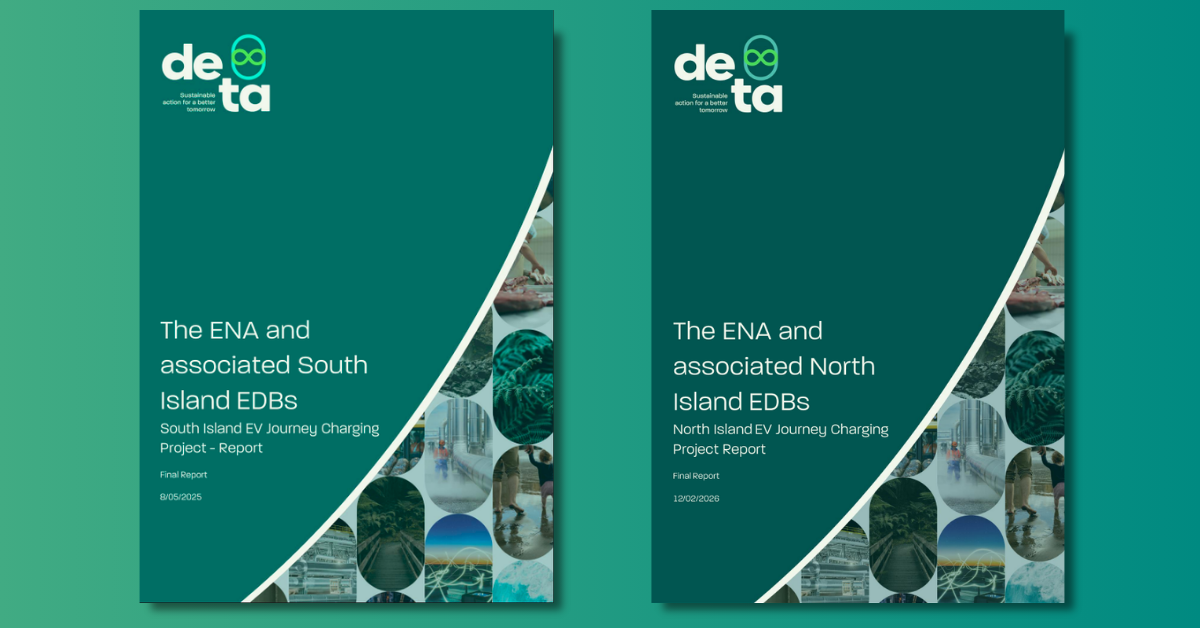
Drive Electric welcomes Electricity Networks Aotearoa’s (ENAs) continued engagement in electric vehicle (EV) charging. However, the EV journey charging project report released 9 March 2026, risks underestimating what is required to support EV uptake in Aotearoa New Zealand.
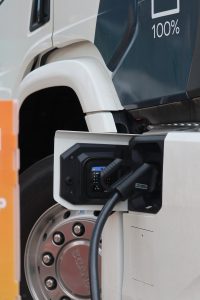
The report focuses narrowly on passenger vehicle journey charging along state highways. While important, this represents only a small part of the public charging ecosystem and overlooks critical needs already emerging across the country, including heavy vehicle charging, destination charging in towns and tourism locations, and the growing demand for high-capacity, multi-charger sites that give drivers confidence to travel.
The International Energy Agency’s Global EV Outlook 2025 highlights that countries leading EV adoption are investing rapidly in high-power, well-distributed public charging networks. By comparison, New Zealand is already behind similar markets on public charging availability and scale, increasing the risk that we become global laggards if infrastructure planning does not accelerate and modernise.1

The ENA’s report’s suggestion that future journey charging needs can largely be met by deploying 50 kW chargers does not reflect EV driver behaviour, nor the capabilities of modern vehicles now entering the fleet. Today’s EV drivers expect faster charging, multiple charge points per site, and the confidence that chargers will be available when they arrive.
Recent EECA research shows that lack of public chargers, queuing, slow charging speeds and inconvenient locations remain key barriers for current and prospective EV drivers. Less than half of EV drivers agree there are enough public chargers nationwide, and concerns about waiting times and charger availability continue to affect confidence in EV travel.2

The ENA’s report’s cost assumptions do not reflect the reality facing Charge Point Operators (CPOs). CPOs are not only looking for small pockets of spare network capacity. To deliver a good driver experience and remain commercially viable, operators are investing in higher-capacity connections, multiple chargers per site, and infrastructure that can scale with demand. Planning around minimal capacity risks infrastructure that is undersized from day one.
Electricity networks play a critical role in enabling electrification, but network companies are not best placed to design the public charging network itself. That role sits with CPOs, whose businesses depend on understanding EV driver needs, technology trends and real-world utilisation.
The electrification of transport is increasing globally and New Zealand will follow. The importance of timely connections, flexible commercial arrangements and better visibility of network capacity is critical to ensure an adequate EV charger network.
ENDS
Supplementary Information
ENA Reports can be downloaded here.
Global Electric Car Sales, 2014-2024.4

References
- https://www.iea.org/reports/global-ev-outlook-2025
- https://www.eeca.govt.nz/assets/EECA-Resources/EECA-EV-Charging-Research-2025.pdf Page 36.
- https://www.iea.org/reports/global-ev-outlook-2025/electric-vehicle-charging
- https://www.iea.org/reports/global-ev-outlook-2025