
Smart electricity management:
Opportunities for the public sector
Report prepared for Singer Electric by Martin Jenkins
Final Report
Disclaimer
This report has been prepared solely for the purposes stated in it. It should not be relied on for any other purpose.
No part of this report should be reproduced, distributed, or communicated to any third party, unless we explicitly consent to this in advance. We do not accept any liability if this report is used for some other purpose for which it was not intended, nor any liability to any third party in respect of this report.
Information provided by the client or others for this assignment has not been independently verified or audited.
Any financial projections included in this document (including budgets or forecasts) are prospective financial information. Those projections are based on information provided by the client and on assumptions about future events and management action that are outside our control and that may or may not occur.
We have made reasonable efforts to ensure that the information contained in this report was up to date as at the time the report was published. That information may become out of date quickly, including as a result of events that are outside our control.
MartinJenkins, and its directors, officers, employees, agents, consultants, and advisers, will not have any liability arising from or otherwise in connection with this report (or any omissions from it), whether in contract, tort (including for negligence, breach of statutory duty, or otherwise), or any other form of legal liability (except for any liability that by law may not be excluded). The client irrevocably waives all claims against them in connection with any such liability.
This Disclaimer supplements and does not replace the Terms and Conditions of our engagement contained in the Engagement Letter for this assignment.
Contents
- Unlocking the potential for better public sector energy management — 2
- The public sector is a large consumer of electricity — 4
- Public sector electricity demand will rise in step with the economy — 5
- The technology exists to better manage demand — 7
- Companies like Singer Electric can help the public sector better manage its electricity use — 10
- Opportunities for better energy management in the public sector — 11
- Steps to realise the benefits of better electricity management — 12
Figures
- Figure 1: Defining Smart Energy Management — 2
- Figure 2: Estimated public sector electricity consumption (2023) — 4
- Figure 3: Public sector demand scenario – electrified grid — 5
- Figure 4: Public sector demand scenario – freight rail — 6
- Figure 5: Public sector demand scenario – public EV charging — 6
- Figure 6: Case study – smart EV charging in New Zealand — 7
- Figure 7: Case study – smart grid management in Spain — 8
Preface
This report has been prepared for Singer Electric by Michael Mills and Natalie James from MartinJenkins (Martin, Jenkins & Associates Ltd).
For over 30 years, MartinJenkins has been a trusted adviser to clients in the government, private, and non-profit sectors in Aotearoa New Zealand and internationally. Our services include organisational performance, employment relations, financial and economic analysis, economic development, research and evaluation, data analytics, engagement, and public policy regulatory systems.
We are recognised as experts in the business of government. We have worked for a wide range of public-sector organisations from both central and local government, and we also advise business and non-profit clients on engaging with government.
Kei te āwhina mātau ki te whakapai ake i a Aotearoa. We are a values-based organisation, driven by a clear purpose of helping make Aotearoa New Zealand a better place. Our firm is made up of people who are highly motivated to serve the New Zealand public, and to work on projects that make a difference.
Established in 1993, we are a privately owned New Zealand limited liability company, with offices in Wellington and Auckland. Our firm is governed by a Board made up of Executive Partners and Independent Directors. Our Independent Directors is Chair David Prentice. Our Executive Partners are Sarah Baddeley, Nick Carlaw, Allana Coulon, Nick Davis, and Richard Tait. Michael Mills is also a non-shareholding Partner of our firm.
Unlocking the potential for better public sector energy management
Through embedding good energy management practices using existing technologies
Smart energy management presents an opportunity for significant electricity efficiency gains, more effective public services, and maximum value for money through more impactful spending. This paper explores electricity demand across the public sector, focusing on the large fiscal and economic benefits of applying existing technologies to reduce and better manage public sector energy consumption.
Government departments are big users of electricity, yet they largely lack modern tools to effectively manage their electricity use. The current focus of government electricity procurement is on reducing the average price of electricity to government agencies, but not on ensuring the effective use of the electricity purchased.
Clear expectations of government agencies for smarter energy management are needed. Government is not using the levers available to it to realise the benefits of scale within and across the public sector in order to optimise its use of electricity.
By leveraging existing technologies, the public sector can achieve significant savings, ease pressure on the electricity grid, and set a strong example for other large energy consumers. Reducing the demand of large consumers strengthens the wider system, making energy more affordable and reliable for all (Peñate-Valentín MC, 2021).
Figure 1: Defining Smart Energy Management

Source: (Mahmood, 2024)
(EV charging / smart system image)
Smart energy management systems optimise energy production, distribution, and consumption by leveraging technologies like smart grids and buildings, energy storage systems, load sharing, and data analytics.
These systems empower users to improve efficiency and reduce consumption through demand-side management strategies.
This is a practical and achievable step to advancing key government priorities
A more efficient public sector
The Government aims to maintain prudent levels of public debt and return the operating balance to surplus by 2027/28, with a focus on improving the efficiency of public spending (Treasury, 2024).
With the public sector’s annual electricity bill exceeding $262 million¹, smarter energy management is needed to optimise use, eliminate waste, and save up to 30% on electricity bills (ABB, 2025) and up to 40% in maintenance costs (ABB, 2025).
Ensuring effective public services
New Zealand’s public sector is committed to meeting the high expectations of its citizens by delivering clear priorities, performance objectives, and measurable outcomes. This includes the need for agencies to reprioritise resources to deliver better outcomes and services (PSC, 2024).
Smart electricity systems empower agencies with insights about their electricity consumption and where to make changes. This enables the reallocation of money spent on electricity to public facing services. Greater visibility of electricity consumption also improves transparency and accountability.
Delivering net zero carbon emissions by 2050
The Government has set ambitious targets to achieve net-zero greenhouse gas emissions for New Zealand (excluding biogenic methane) by 2050, with the Electrify NZ plan aiming to double renewable energy by then (MfE, 2024).
However, clean energy generation cannot achieve a smooth transition alone. It is also necessary to reduce demand to ensure a reliable supply of electricity from intermittent sources. With smart systems, government agencies can reduce their consumption and therefore emissions, while also decreasing their impact on the national energy system, especially during peak demand periods.
Achieving greater value from public spending
Smart energy management systems offer solutions to align supply with demand and prevent disruptions, while lowering the need for costly investment in new electricity generation (EECA, 2025). This balance helps to alleviate market strain, prevent price surges, and ensure a dependable electricity system. This supports the Government’s commitment to ensuring efficient investments for reliable and cost-effective electricity supply (Beehive, 2024).
The public sector can also take control of its electricity consumption to position itself as a more attractive consumer, securing favourable contracts and dynamic pricing models, driving further cost savings in the long-term.
¹ This is an indicative figure from MBIE’s AOG Electricity Contract management records, not an official statistic.
The public sector is a large consumer of electricity
It consumes 6% (or more) of electricity in New Zealand
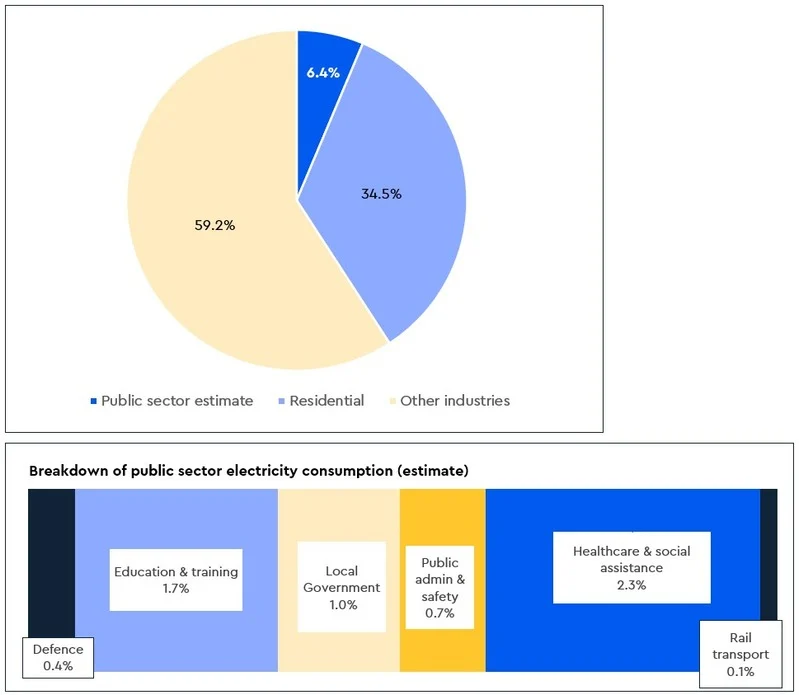
Based on estimates of available data, in the year 2023, public sector entities² used approximately 8,887 terajoules of electricity, accounting for around 6.4% of total electricity consumption. Overall consumption has stayed relatively stable with a gradual increase since 2017 (EECA, 2023). Future use will increase as New Zealand (including the public sector) decarbonises.
The public sector spends at least $262 million per year on electricity
Approximately 415 public sector entities participate in the All-of-Government (AOG) electricity contract, which accounts for around 3% of New Zealand’s total electricity consumption. The associated annual electricity spend is estimated at $262 million, a substantial figure.
However, this represents only a portion of the public sector spend, as not all public sector organisations procure their electricity through the AOG framework. The total public sector spend is likely more than $500 million.³
Figure 2: Estimated public sector electricity consumption (2023)
Source: (EECA, 2023)
Notes
- There may be crossover within these classifications across public and private domains. This assessment serves as an estimate rather than an accurate calculation of total public sector energy consumption. This should not be read as official statistics.
- We have used the following industry classifications to distinguish between public entities and residential or private businesses: Public administration and safety, Local government administration, Defence, Education and Training (including pre, primary, and secondary schools, and tertiary and other education), Healthcare and social assistance, and Rail transport.
- This is indicative information from MBIE’s AOG Electricity contract management records and should not be taken as official statistics.
Public sector electricity demand will rise in step with the economy
Electricity demand is rising due to growth in business, industry, and electric vehicle use. MBIE predicts that, by 2050, electricity demand will increase by 56.6% according to conservative estimates, or up to 81% under favourable economic conditions (MBIE, 2024).
Demand will be driven by increasing electrification
Including the replacement of fossil fuels with electricity and greater adoption of EVs
Electricity is only one of several energy sources used by the public sector. In 2023, an estimated 65% of public sector energy consumption came from electricity, while the rest came from natural gas (20%), diesel (12%), and coal (3%). Heating and cooling systems account for approximately 61% of the public sector’s total energy consumption, with 38% of this demand still reliant on fossil fuels (EECA, 2023).
As New Zealand decarbonises, the public sector’s overall use of electricity will increase as a proportion of its total energy use, replacing fossil fuel-dependent systems like heating and cooling with electric alternatives.
Transportation, historically reliant on fossil fuels, is set to become a major consumer of electricity as more vehicles shift to electric power. As these electric alternatives replace traditional petrol and diesel-powered transport, the strain on the grid will increase substantially.
Figure 3: Public sector demand scenario – electrified grid

(Hydro dam / grid image from PDF)
If 75% of the public sector were to switch away from natural gas, 50% away from diesel, and 75% from coal, this would increase public sector electricity consumption by around 36%.
This equates to 2066 terajoules of electricity, or enough to power over 80,000 New Zealand households or the entire Northland region for a year.
Source: (EECA, 2023) and (Electricity Authority, 2025)
Notes
- Fuel switching rates for natural gas, diesel, and coal are based on MBIE’s conservative estimates (Reference Scenario for the commercial sector, as outlined in the Electricity Demand and Generation Scenarios report (MBIE, 2024)).
- Between 1 May 2024 and 30 April 2025, Northland residents consumed an estimated 467 GWh of electricity (1,681 terajoules) (Electricity Authority, 2025).
- Comparative household electricity consumption is based on the 2024 average for New Zealand, estimated at 7,140 kWh per year (Electricity Authority, 2024).
Figure 4: Public sector demand scenario – freight rail

(Freight train image)
Currently around 99% of freight rail energy needs are met through diesel, with only 1% coming from electricity.
Passenger rail systems rely on electricity for 68% of their energy consumption.
If freight rail were to transition to a similar level of electricity use, this would result in a significant increase in electricity demand, from 15 to 1,070 terajoules annually—enough to power Taranaki for a year.
Source: (EECA, 2023) and (Electricity Authority, 2025)
Notes
- Between 1 May 2024 and 30 April 2025, Taranaki residents consumed an estimated 285 GWh of electricity (1,026 terajoules) (Electricity Authority, 2025).
Additional Context
The share of electric vehicles in the government fleet has surged from under 1.5% in 2020 to 23.9% in 2025, totalling 3,810 EVs (MBIE, 2025).
Charging these vehicles requires significant electricity—around 7,620 MWh annually⁴—the equivalent of the Arnold Hydro Station’s output or enough to power the entire population of Hanmer Springs (Electricity Authority, 2025).
In 2025, the Government committed to expanding public EV chargers from 1,378 to 10,000 by 2030 (Beehive, 2025). These figures highlight the need for strategic infrastructure planning to manage significant (and growing) electricity demands for EVs.
Figure 5: Public sector demand scenario – public EV charging
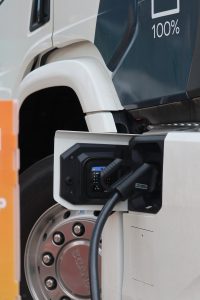
(EV charging image)
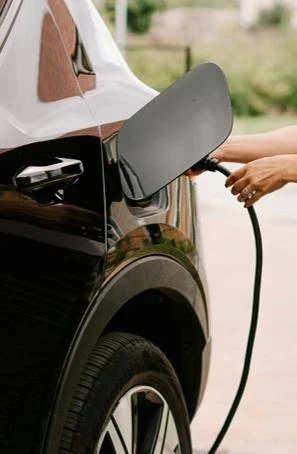
Installing 8,622 additional public EV chargers would increase electricity demand by 2,492 terajoules annually—enough to power Dunedin’s population.
This demand is also equivalent to dedicating one of Huntly Power Station’s generators solely to EV charging.
Source: (Singer Electric, 2025) and (Electricity Authority, 2025)
Notes
- Looking at government agencies currently under Singer management, the average AC per-charger consumption is 220 kWh per day. For every additional 100 chargers installed, electricity consumption increases by 11 megawatts per month (Singer Electric, 2025).
- Between 1 May 2024 and 30 April 2025, Dunedin residents consumed an estimated 393 GWh of electricity (1,415 terajoules) (Electricity Authority, 2025).
- Assumes an annual energy consumption of 2 MWh per vehicle for a fully electrified public sector fleet (Australia Electric Vehicle Council, 2024).
The technology exists to better manage demand
The technology exists for the public sector to better manage its increasing use of electricity. Smart energy management leverages existing technology to optimise energy production, distribution, and consumption in ways that promote efficiency, effectiveness, and sustainability. Core technologies include:
- smart grids with real-time monitoring of energy supply and demand
- smart buildings with intelligent lighting, HVAC, and heating systems
- energy storage systems that store excess energy for use during peak demand
- load shedding capabilities that distribute demand evenly across a grid or network
- electricity generation, such as solar
- data analytics, which enable the collection, analysis, and interpretation of consumption data (Pandiyan, 2023)
By adopting these technologies, the public sector can better implement demand-side management strategies to prioritise optimal energy usage, boosting efficiency, improving effectiveness, maximising value from investments, and taking pressure off the wider electricity system—especially during peak demand.
Driving efficiencies
Save up to 30% on electricity consumption
If implemented correctly, smart electricity management systems can save as much as 30% of electricity costs (ABB, 2025). With smart solutions and effective maintenance, it is possible to identify and manage energy-hungry devices, avoid unnecessary usage during peak hours, take advantage of off-peak electricity rates, and pinpoint low-demand periods to reduce waste (Saleem, 2023).
Figure 6: Case study – smart EV charging in New Zealand

Source: (Vector, 2022)
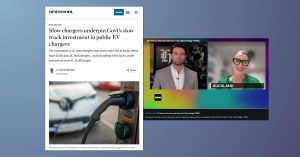
Vector conducted an EV Smart Charging Trial to explore how smart charging solutions can manage peak network demands.
Vector installed EV smart chargers at the homes of 200 participants across Auckland. These smart chargers communicate with the electricity network and the vehicles being charged to optimise charging times, reducing pressure on the network and costs for owners.
Smart charging algorithms successfully reduced electricity demand during peak hours without compromising customer satisfaction, helping to avoid the need for additional electricity infrastructure.
Reduce maintenance costs by up to 40%
Smart energy management systems optimise the operation of appliances and prevent excessive load demand, reducing strain on equipment and minimising wear and tear. This enhances reliability, extends the lifespan of devices, and slashes maintenance expenses (Saleem, 2023).
With up to 40% in operational savings, organisations can achieve cost-efficiency without compromising safety or reliability (ABB, 2025).
Boosting effectiveness
Innovative energy systems ensure power is used when and where it’s needed. Real-time monitoring lets departments track electricity use, identify inefficiencies, and improve transparency regarding consumption — leading to more effective spending and better resource management (Saleem, 2023).
Cut carbon emissions
Reducing overall energy demand supports decreases in greenhouse gas emissions. This not only strengthens climate policy efforts but demonstrates a genuine dedication to environmental responsibility (Saleem, 2023).
Figure 7: Case study – smart grid management in Spain

Source: (Latief, 2024)
A significant challenge in the Canary and Balearic Islands is ensuring that existing power grids can take on renewable energy sources while maintaining stability.
There is ongoing work to deploy a flexible and reliable automation solution to mimic the operation of large generators. This is designed to help stabilise the grid when loads and renewable energy production fluctuate.
This approach ensures reliable and resilient operations despite fluctuations in renewable energy production and supports the integration of 67% renewable energy into Spain’s generation mix.
Achieving a reliable and economical electricity system
Ensuring secure and reliable electricity supply
Smart energy systems help ensure stable energy supply, decreasing the risk of outages, while also reducing the need for costly investment in electricity generation. This supports a more resilient and reliable power grid, safeguarding the long-term needs of consumers and public services (EECA, 2025).
Lowering long-term electricity costs
Energy-intensive consumers can disrupt the balance of electricity supply and demand, sometimes pushing prices higher. Smart energy systems counteract this by cutting peak-time consumption and alleviating market pressure.
This keeps demand investments productive and cost-effective, building a stable and economical energy system (EECA, 2025).

Companies like Singer Electric can help the public sector better manage its electricity use
Singer Electric supports large organisations on sustainable electrification journeys
Founded in 1953, Singer Electric is a leading NZ-owned electrical company driving the smart electrification of buildings and transport. Our mission is to enhance electrical systems with technology for a more sustainable, connected, and energy-responsive future.
Singer Electric provides end-to-end Design, Build, Monitoring, and Maintenance services to large commercial and public sector organisations transitioning to sustainable electrification.
As the electrical industry undergoes rapid change, we see real opportunity to support this shift through EVSE⁵ infrastructure, energy management software, alternative generation, and energy aggregation.
With rising grid pressures and energy costs, organisations must adopt smart, decentralised infrastructure to drive efficiency and savings.
Singer Electric’s Apollo platform supports this through simplified, data-driven energy management.
At Singer, we are your trusted adviser, delivering full turnkey electrification solutions focused on decarbonisation, decentralisation, and digitalisation. We see this as an exciting opportunity to make fundamental changes within the New Zealand public sector.
We strive to solve complex electrical challenges with smart solutions
We establish long-term partnerships with our customers to be the go-to organisation for complex electrical needs, including the move to smart electrification, enabling more sustainable practices.
Currently, Singer Electric manages EV charging assets for the following public sector entities:
- Department of Corrections
- Ministry of Justice
- NZ Police
- Department of Internal Affairs
- Maritime NZ
- Rotorua and Taupo Hospitals
Singer Electric’s work with public sector clients has uncovered significant inefficiencies in EV fleet and charging infrastructure management, leading to unnecessary energy strain.
Without the right systems in place to oversee charging operations, these challenges escalate—driving up costs, disrupting building power systems, and limiting fleet effectiveness.
⁵ Electric vehicle supply equipment infrastructure.
Opportunities for better energy management in the public sector
Fragmented procurement processes focus on lowest cost, not best use
Currently, the AOG electricity contract seeks to leverage the purchasing power of government to secure competitive pricing (MBIE, 2025). While this approach delivers electricity at the lowest price, there is no associated focus to reduce energy demand and make best use of every unit purchased. Doing so is necessary to drive value and make costs savings, especially as total electricity demand increases with transition from fossil fuels to electricity.
While many public sector entities are mandated to use the AOG contract, not all adhere to this model, instead opting for alternative procurement approaches that better suit their operational needs. In the education sector for instance, school boards of trustees oversee school management and operations and receive support for their management of property from Education Property Services.
Such fragmented and devolved approaches to energy management limit the potential for coordinated approaches to better managing energy use, resulting in inefficiencies that could be addressed through a more unified strategy focussing on price, demand management, and use, to deliver increased value to government.
Current EV charging practices amplify inefficient energy use
EV pool cars are charging unnecessarily during peak electricity periods, driving up energy costs when demand is highest. EVs are frequently charged to 100% and left connected for extended periods, accelerating battery degradation and reducing long-term performance. Improper matching of EVs to charger capabilities leads to inefficient charging cycles, further compounding the problem.
The public sector lacks the visibility to resolve these issues
The unmanaged draw from these chargers disrupts the building’s overall power system, creating operational challenges and unnecessary costs. However, without real-time visibility, data analytics, and monitoring capabilities, agencies cannot make informed decisions on energy demand management or infrastructure investments.
Operational silos prevent agencies from leveraging collective resources
Even when co-located, agencies function independently, with no mechanism for cross-agency charger use. This fragmented approach results in a 3:1 vehicle-to-charger ratio—far exceeding the international best practice of 10:1—creating significant wastage and energy strain.
Steps to realise the benefits of better electricity management
There are tangible opportunities for immediate gains
By taking a coordinated all-of-government approach to managing EV infrastructure
The continued electrification of government’s vehicle fleet is inevitable and will continue to drive additional demand for electricity. A coordinated approach across government agencies is critical to meeting this demand.
Many existing EV chargers are coming to the end of their life and will need replacing from the end of 2025. There will also be growing demand for EV charging stations as more of the government fleet is electrified. This presents you with an opportunity to consolidate the management of EV charging infrastructure under a single platform to enable the benefits of scale, load sharing, demand forecasting, and development planning.
An all-of-government approach for charger sharing would allow any government employee or fleet vehicle to access chargers across agencies and geographies, significantly improving utilisation. Implementing an EV management platform would enable intelligent scheduling and peak demand control, staggering or pausing charging sessions to lower costs and ease pressure on the grid.
With an estimated 5,000 chargers in operation, the potential energy output reaches 250 megawatt hours — equivalent to one of Huntly Power Station’s four coal-fired units. By managing these chargers through a coordinated platform, the government could act as an energy aggregator, intelligently throttling charging demand to stabilise the grid and redirect excess power, rather than relying on fossil fuel generators to meet peak demand (Energy Market Services, 2025).
By requiring smart energy management in all new and retrofitted buildings
The heating, cooling, and lighting of buildings accounts for 75% of the public sector’s electricity consumption (EECA, 2023). To realise large savings in electricity use, government should mandate the adoption of smart electrical infrastructure in all new public sector builds. This should include:
- solar integration (currently, no sites have solar installations that can offset EV charger power usage)
- load shedding technology, to instantly reduce consumption at times of peak electricity demand
- real-time data analytics, to provide the basis for better management and use of electricity within and across buildings
- conversion of outdated gas boilers to more sustainable alternatives
Public sector entities with ageing infrastructure — such as schools and hospitals — present great opportunities to cost-effectively implement energy efficiency improvements. As buildings are replaced or retrofitted, smarter energy solutions can and should be installed.
By replacing reliance on natural gas for heating in schools
There is opportunity to replace reliance on natural gas for heating in schools and other government facilities, to support wider demands on the electricity network and the need to prioritise gas for peak energy generation.
For example, the education sector consumed over 89,000 megawatt hours of energy from natural gas to fuel boiler systems in 2023 (EECA, 2023). Replacing these systems with heat pumps — proven to be three to five times more energy-efficient — would significantly reduce energy consumption, while cutting reliance on fossil fuels (IEA, 2022).
A single school with 500 students and 50 staff consumes approximately one megawatt-hour per day. If the government converted 500 out of its 2,500 schools to smarter energy solutions, this could free up 500 megawatt-hours — equivalent to the output of Benmore Power Station (Energy Market Services, 2025).
Ministerial expectations of public sector agencies are critical to driving change
Ministers’ expectations of public sector agencies in their management of electricity use will be critical to quickly realising the benefits of smarter management of electricity use. Setting such expectations represents a low-risk, high-return opportunity to deliver immediate gains using proven, readily available technology.
Ministers have the ability through letters of expectations and directions to officials in the Public Service Commission, MBIE, and other government agencies such as the Ministry of Education, to set clear expectations for how they want the public sector to take the steps necessary to quickly achieve more effective and efficient electricity management.
These expectations should go beyond securing electricity at the lowest price. They should require agencies to actively monitor, manage, and optimise their electricity usage to realise large benefits and reduce the impact of the public sector on the wider electricity system as the economy continues to decarbonise.
Key actions should include:
- Agencies should be required to assess their current electricity infrastructure and consumption and implement plans to realise both immediate and longer-term savings.
- Clear monitoring and reporting requirements should be implemented to support public sector accountabilities for better energy management and to demonstrate effectiveness.
- Sector-wide targets for consumption reduction and technology standards and guidelines should be developed for new builds and retrofits, and central support provided to agencies for their implementation.
- Electricity and other procurement practices should be revised to provide for energy management technologies and support services.
For these changes to have the greatest impact, they need to be coordinated. Ministers’ expectations of agencies should include expectations that they will work together and coordinate their initiatives to reduce and better manage their electricity demand — especially in respect of EV charging infrastructure.
⁶ Including pre-school, primary, secondary, tertiary, and other education.
By taking an all-of-government approach to managing demand, there is potential to achieve system-wide efficiencies that generate additional savings on electricity and infrastructure costs. As more organisations share insights and align practice, effectiveness also increases — supporting the transition away from fossil fuels, enabling the reallocation of funds towards high-impact services, and setting the conditions for an affordable, sustainable, and reliable electricity market.
Appendix 1: References
ABB. (2020). Sustainability plan pays off for ABB factory with 30% energy savings. Retrieved from Asea Brown Boveri (ABB):
https://new.abb.com/news/detail/69624/sustainability-pays-off-for-abb-factory-with-30-energy-savings
ABB. (2025). Advanced Services. Retrieved from Asea Brown Boveri (ABB):
https://new.abb.com/service/electrification/advanced-services
ABB. (2025). Building Energy Management. Retrieved from Asea Brown Boveri:
https://new.abb.com/buildings/fr/smarter-buildings/building-energy-management
Australia Electric Vehicle Council. (2024). Australia Electric Vehicle Council. Retrieved from:
https://electricvehiclecouncil.com.au/docs/how-much-electricity-does-charging-an-electric-vehicle-consume-compared-to-typical-household-usage
Beehive. (2024). Statement of Government Policy to the Electricity Authority under section 17 of the Electricity Industry Act 2010. Retrieved from:
https://www.beehive.govt.nz/sites/default/files/2024-10/Government%20Policy%20Statement%20on%20Electricity%20-%20October%202024.pdf
Beehive. (2025). Accelerating the roll-out of public EV chargers. Retrieved from:
https://www.beehive.govt.nz/release/accelerating-roll-out-public-ev-chargers
EECA. (2023). Energy End Use Database. Retrieved from Energy Efficiency and Conservation Authority:
https://www.eeca.govt.nz/insights/data-tools/energy-end-use-database/
EECA. (2025). Demand flexibility – a smarter grid. Retrieved from Energy Efficiency and Conservation Authority:
https://www.eeca.govt.nz/insights/energy-in-new-zealand/demand-flexibility-a-smarter-grid/
Electricity Authority. (2024). Residential consumption league table. Retrieved from Electricity Market Information:
https://www.emi.ea.govt.nz/Retail/Reports/ZSZG4D?DateTo=20241231&RegionType=REG_COUNCIL&Show=Avg&_si_dr_RegionType|NZ,vl4
Electricity Authority. (2025). Generation trends. Retrieved from Electricity Market Information:
https://www.emi.ea.govt.nz/Wholesale/Reports/W_GC_C?_si=vl3
Electricity Authority. (2025). Residential consumption trends. Retrieved from Electricity Market Information:
https://www.emi.ea.govt.nz/Retail/Reports/OYUCEO?DateFrom=20240501&DateTo=20250430&RegionType=REG_COUNCIL&_rsdr=L12M&_si=vl3
Energy Market Services. (2025). Electricity Market Overview. Retrieved from em6:
https://app.em6.co.nz/?stackedgwap.filter.gridZone=15&stackedgwap.filter.interval=30minute
IEA. (2022). The Future of Heat Pumps. Retrieved from International Energy Agency:
https://www.iea.org/reports/the-future-of-heat-pumps
Latief, Y. (2024). Red Eléctrica orders synchronous condensers for Canary and Balearic Islands. Retrieved from Smart Energy Management International:
https://www.smart-energy.com/industry-sectors/energy-grid-management/red-electrica-orders-synchronous-condensers-for-canary-and-balearic-islands/
Mahmood, M. C.-U.-R. (2024). Impacts of digitalization on smart grids, renewable energy, and demand response: An updated review of current applications. Energy Conservation and Management, 24.
Mann, J. (2022). Australia’s ABB captures, stores and regenerates braking energy. Retrieved from Railway Technology:
https://www.railway-technology.com/features/australias-abb-captures-stores-and-regenerates-braking-energy/
MBIE. (2024). Electricity Demand and Generation Scenarios: Results summary. Retrieved from Ministry of Business, Innovation and Employment:
https://www.mbie.govt.nz/assets/electricity-demand-and-generation-scenarios-report-2024.pdf
MBIE. (2025). Electricity: All-of-Government electricity contract. Retrieved from New Zealand Government Procurement:
https://www.procurement.govt.nz/contracts/electricity/
MBIE. (2025). Government Fleet Emissions Dashboard. Retrieved from Ministry of Business, Innovation & Employment:
https://www.procurement.govt.nz/assets/procurement-property/documents/broader-outcomes/government-fleet-emissions-dashboard.pdf
MfE. (2024). Sector policies and plans. Retrieved from Ministry for the Environment:
https://environment.govt.nz/publications/new-zealands-second-emissions-reduction-plan/sector-policies-and-plans/
Pandiyan, P. S.-K. (2023). Technological advancements toward smart energy management in smart cities. Energy Reports, 10, 648–677.
Peñate-Valentín MC, S.-C. a. (2021). The promotion of innovative service business models through public procurement: An analysis of Energy Service Companies in Spain. Sustainable Production and Consumption, 27, 1857–1868.
PSC. (2024). Strategic Intentions 2024–2028. Retrieved from The Public Service Commission:
https://www.publicservice.govt.nz/publications/strategic-intentions/our-strategic-direction
Saleem, U. S. (2023). Integrating Smart Energy Management System with Internet of Things and Cloud Computing for Efficient Demand Side Management in Smart Grids. Energies, 16, 4835–4856.
Singer Electric. (2025). Optimising Government EV Charging Infrastructure. Singer Electric.
Treasury. (2024). Budget Policy Statement. New Zealand Government. Retrieved from:
https://www.treasury.govt.nz/sites/default/files/2024-03/bps24.pdf
Vector. (2022). EV smart charging trial. Retrieved from Vector:
https://www.vector.co.nz/articles/ev-smart-charging-trial