Home charging for work electric vehicles (EVs) is one of the simplest ways for New Zealand businesses to cut costs, reduce emissions, and keep fleets moving. When it works well, it delivers big benefits with very little complexity.
Over the past year, Drive Electric worked closely with government, regulators, and industry partners to remove barriers that were holding businesses back. In January 2026, that work reached an important milestone. A small but important regulatory change made home charging easier and fairer for businesses across Aotearoa.
The WorkSafe Energy Safety Addendum (3rd Edition) removed the requirement that employer-owned EVs must be charged in a garage. This update aligns official guidance with existing electrical safety standards and reflects how New Zealanders actually live.
Drive Electric has successfully advocated for this change to ensure WorkSafe guidance is practical, consistent, and fit for purpose. The result is a clear pathway for businesses to roll out home charging programmes with confidence — safely, consistently, and at scale.
KEY TAKEAWAYS
- Home charging is the cornerstone of efficient work EV fleets
- WorkSafe has removed the garage requirement for employer-owned EVs
- Outdoor home charging is safe when installed to New Zealand electrical standards
- More workers can now take part in fleet programmes, including renters
- Businesses face less red tape and lower compliance costs
WHY HOME CHARGING MATTERS FOR WORK EV FLEETS
For most fleets, home charging is the missing link. It allows vehicles to start each day charged, reduces reliance on public chargers, and delivers the lowest possible energy cost.
When done right, home charging helps organisations:
- Lower fuel and operating costs
- Improve fleet reliability
- Reduce pressure on public infrastructure
- Support long-term sustainability goals
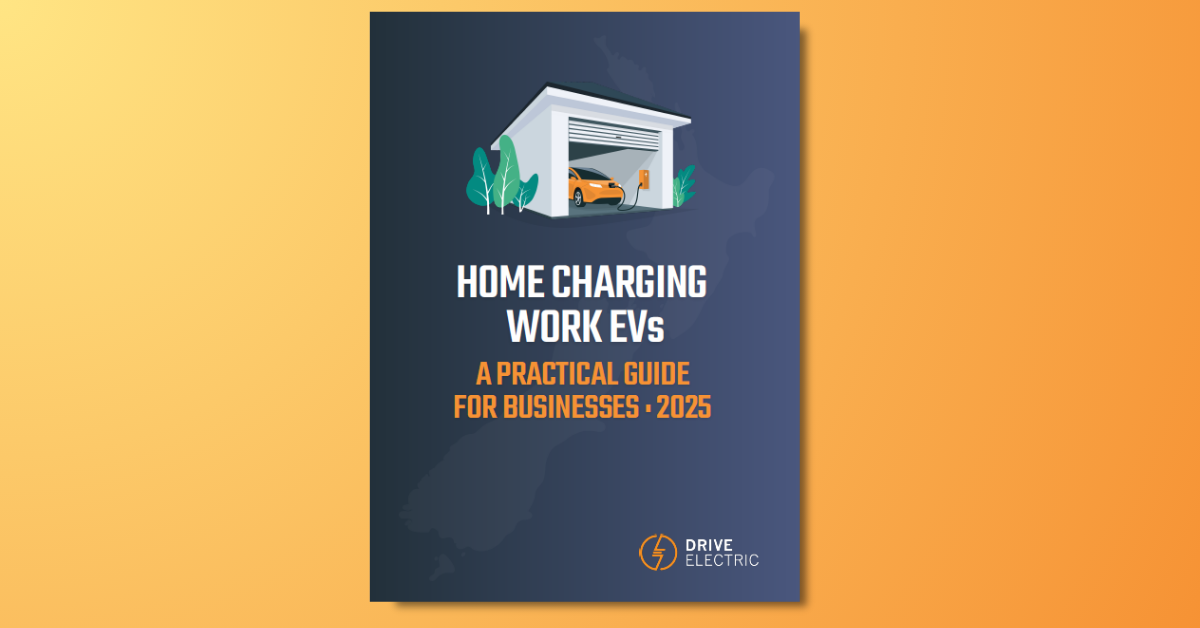
That is why, in October 2025, Drive Electric partnered with Fleet Partners, Meridian Energy, PDL by Schneider Electric and Singer Electric to publish Home Charging Work EVs — A Practical Guide for Businesses.
The guide gives organisations a clear framework across planning, safety, technology, staff engagement, and daily operations. The launch event, hosted by Vector, confirmed strong demand from businesses ready to move.
HOW DRIVE ELECTRIC INITATED CHANGES TO THE WORKSAFE EV CHARGING GUIDANCE
Despite strong electrical safety rules already in place, the previous WorkSafe addendum included one line that caused confusion.
The guidance stated that employer-owned electric vehicles “should be charged in a garage”. This single line created confusion and unnecessary barriers. It excluded many workers — including around one-third of New Zealanders who rent and may not have access to a garage — even when outdoor charging met all safety requirements.
In December 2025, Drive Electric formally raised these concerns with the Minister for Workplace Relations and Safety, outlining practical improvements to the WorkSafe EV charging safety addendum (2nd Edition). At the same time, Drive Electric wrote to the Minister of Building and Construction with recommendations to better align AC charging building regulations between Australia and New Zealand.
These letters were also shared with the relevant Shadow Ministers to ensure cross-party awareness of the issue.
WHAT CHANGED IN THE WORKSAFE EV CHARGING ADDENDUM
In January 2026, WorkSafe released the Energy Safety Addendum (3rd Edition). The garage requirement was removed.
This brings guidance back into line with existing electrical safety laws, which already require:
- Appropriate RCD protection
- Weather-rated equipment for outdoor use
- Correct installation height
- Installation by licensed electricians
Safety is determined by how charging equipment is installed and managed — not by vehicle ownership or the presence of a garage.
WHAT BUSINESSES SHOULD DO NOW
This update gives businesses clarity and confidence. If your business operates, or is planning, a work EV fleet, you should revisit home charging.
Drive Electric will be updating its white paper to reflect the new WorkSafe guidance, including links to the latest regulatory information.
DOCUMENTS AND FURTHER READING
Home Charging Work EVs — A Practical Guide for Businesses. October 2025, Drive Electric.
Drive Electric Releases Home and Workplace Charging Guide. November 2025, EVs and Beyond.
Drive Electric letter to the Minister for Workplace Relations and Safety, outlining practical improvements to the WorkSafe EV charging safety addendum (2nd Edition). December 2025, Drive Electric.
Drive Electric letter to the Minister of Building and Construction with recommendations to better align AC charging building regulations between Australia and New Zealand. December 2025, Drive Electric.
Regulatory Guidance Notes. Guidelines for Safe Electric Vehicle Charging. January 2026, WorkSafe.
Electric Vehicle Charging Safety Guidelines. January 2026, WorkSafe.
Drive Electric letter to the Minister for Workplace Relations and Safety expressing appreciation for the WorkSafe EV charging safety addendum (3rd Edition). January 2026, Drive Electric.